Zinc roofing has a reputation for longevity, clean lines, and architectural appeal. When installed correctly, it can last decades with minimal maintenance. Yet despite the quality of the material, zinc roofs still fail – sometimes far sooner than expected.
In most cases, the problem isn’t zinc itself. It’s how the roof was installed.
The temptation to take a DIY approach is completely understandable. With rising costs and a growing culture of hands-on home improvement, many property owners feel confident tackling parts of a build themselves. However, zinc roofing is one area where good intentions and general building skills are rarely enough.
The Natural Appeal of DIY Roofing Projects
DIY has become more accessible than ever. Online tutorials, supplier guides, and tool availability can make even complex projects feel achievable.
For homeowners, DIY often promises:
- Lower upfront costs
- Greater control over the project
- A sense of accomplishment
With simpler roofing materials, this approach can sometimes work. Zinc, however, operates by a very different set of rules.
Zinc Roofing Is a Specialist System, Not Just a Material
Zinc roofing isn’t simply sheets fixed to a structure. It is a designed system that relies on precision, movement allowance, and specialist detailing.
Unlike many traditional materials, zinc:
- Expands and contracts significantly with temperature changes
- Requires specific fixing methods
- Depends on exact joint detailing to remain watertight
When these principles are misunderstood or ignored, failure becomes almost inevitable.
Thermal Movement: The Most Common Cause of Failure
One of the biggest reasons zinc roofs fail is incorrect handling of thermal movement.
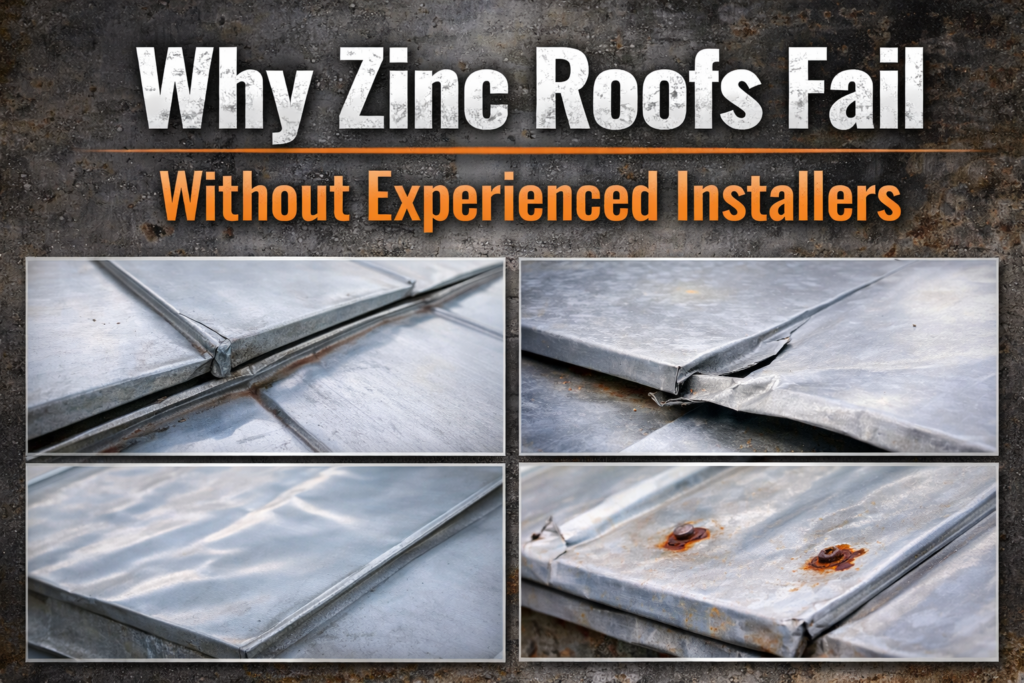
Zinc naturally expands and contracts as temperatures change. If the roof is fixed too rigidly, the metal has nowhere to move. Over time, this leads to:
- Buckling or rippling
- Split seams
- Stress fractures
- Fixing failure
Experienced installers design the roof to accommodate movement. DIY installations often don’t – not through carelessness, but through lack of specialist knowledge.
Incorrect Jointing and Seaming Cause Zinc Roof Failures
Zinc roofs rely heavily on jointing techniques such as standing seams. These seams aren’t decorative; they are structural and functional.
Common DIY-related issues include:
- Seams that are too tight
- Incorrect seam heights
- Poorly formed joints
- Inconsistent alignment
Even small errors can compromise weather resistance, allowing water ingress that may not appear immediately but causes damage over time.
Ensure Proper Ventilation and Roof Build-Up Errors in Zinc Roofing
Zinc roofing requires a specific roof build-up beneath the surface. Proper ventilation is critical to prevent condensation, which can corrode fixings and damage supporting materials.
DIY installations often fail because:
- Ventilation layers are omitted or misunderstood
- Incorrect membranes are used
- Moisture becomes trapped beneath the zinc
These problems may take months or years to show, but when they do, repairs can be extensive.
The Risk of Incompatible Materials
Zinc reacts with other metals and materials. Using incompatible fixings, flashings, or underlays can cause accelerated corrosion, even when the zinc itself is high quality.
Professional installers understand:
- Which materials can and cannot be used with zinc
- How to isolate components correctly
- How to prevent chemical reactions
DIY approaches often overlook these interactions, leading to premature failure that appears mysterious until investigated properly.
Why Manufacturer Guidance Isn’t Enough
Many people assume that following manufacturer instructions is sufficient. While guidance documents are essential, they are not a substitute for hands-on experience.
Manufacturer details cannot account for:
- Complex roof geometries
- Site-specific conditions
- Weather exposure differences
- Structural movement
Experienced installers adapt principles to real-world conditions, something DIY guidance simply cannot replicate.
Repairing a Failed Zinc Roof Is Rarely Simple
Once a zinc roof fails, repairs are rarely straightforward. Because the material works as a system, isolated fixes often don’t address underlying issues.
Common outcomes include:
- Partial removal of roof sections
- Replacement of incorrectly installed panels
- Correction of substructure and ventilation
In many cases, fixing a failed DIY zinc roof costs more than professional installation would have initially.
Experience Protects the Investment
Zinc roofing is an investment in longevity. When installed properly, it can outperform many other materials over decades.
Experienced installers bring:
- Knowledge of zinc behaviour
- Precision workmanship
- Correct detailing at edges, joints, and penetrations
- Compliance with best practice standards
This expertise protects both the roof and the property beneath it.
Working with specialists such as JTC Roofing ensures that zinc roofing systems are designed and installed with the material’s unique requirements in mind – not treated like a generic metal covering.
When Professional Installation Makes the Difference
Zinc roofing performs best when:
- Installed by trained professionals
- Designed specifically for the building
- Detailed to accommodate movement and drainage
This doesn’t diminish the value of DIY; it simply recognises that some materials demand specialist handling.
Zinc is unforgiving of shortcuts, but extremely rewarding when treated correctly.
Recognising When DIY Isn’t the Right Route
The urge to DIY is practical and often cost-driven. But with zinc roofing, the risks outweigh the savings.
It may be time to step back from DIY if:
- The roof design is complex
- Long-term performance is a priority
- You want to avoid costly rework
- The building is exposed to harsh weather
In these situations, professional installation isn’t an upgrade but a necessity.
Frequently Asked Questions (FAQs)
Can zinc roofing be installed as a DIY project?
It’s not recommended. Zinc requires specialist knowledge of movement, detailing, and system design.
Why do zinc roofs buckle or split?
This is usually due to incorrect fixing or lack of allowance for thermal expansion.
Is zinc roofing still worth the investment?
Yes. When installed by experienced professionals, zinc offers exceptional longevity and performance.
Zinc Roofs Fail From Inexperience, Not Design
Zinc roofing doesn’t fail because it’s fragile or flawed. It fails because it demands respect for how it behaves.
DIY enthusiasm is understandable, but zinc is not a forgiving material. Without experience, small mistakes compound into major problems that undermine the very benefits zinc is chosen for.
With skilled design and expert installation, zinc roofs deliver durability, beauty, and long-term value. Supported by experienced specialists like JTC Roofing, zinc roofing becomes what it was always meant to be – a reliable, high-performance solution that stands the test of time.